
I do not own a studio, and every frame of Bengali food photography on this site was made without one, in someone’s actual kitchen or on an actual dining table, in Chittagong or Dhaka, with whatever light happened to be coming through the window that day. People still ask what gear made the shots work. Honestly, none of it. What changed the photographs was five decisions I make before I ever pick up the camera, and I would rather walk through them the way they actually happened on real shoot days than hand you a checklist.
1. Let the Window Do What a Backdrop Never Could

One afternoon in a garden, I set a glass of lebu shorbot down at the edge of a patch of grass, dropped a lime slice on top, scattered a few wedges loose in front, and waited for the sun to drop low enough to cut through the leaves above. That was the whole setup. No backdrop, no bounce card, no continuous light. The dappled shade and a single highlight sitting on the glass did every job a paper backdrop is usually paid to do. If you have a balcony rail, one potted plant near a window, or even a patch of afternoon shade on a wall, you already own a better set than most people build indoors.
2. Photograph the Kitchen Before the Cooking Starts

Some of my favorite frames from this project never touch a finished plate at all. Turmeric spilling into a loose mound on the counter. Chili powder settled beside it. Cinnamon snapped into uneven pieces, a couple of cloves scattered next to a spoon of salt, all shot straight down under ordinary kitchen light. It tells you more about what Bengali cooking actually is than a plated curry ever could, and it is also the laziest setup on this list. No plating, no arranging, just decent light on ingredients that were already sitting there.
3. Choose One Object and Let the Rest Go
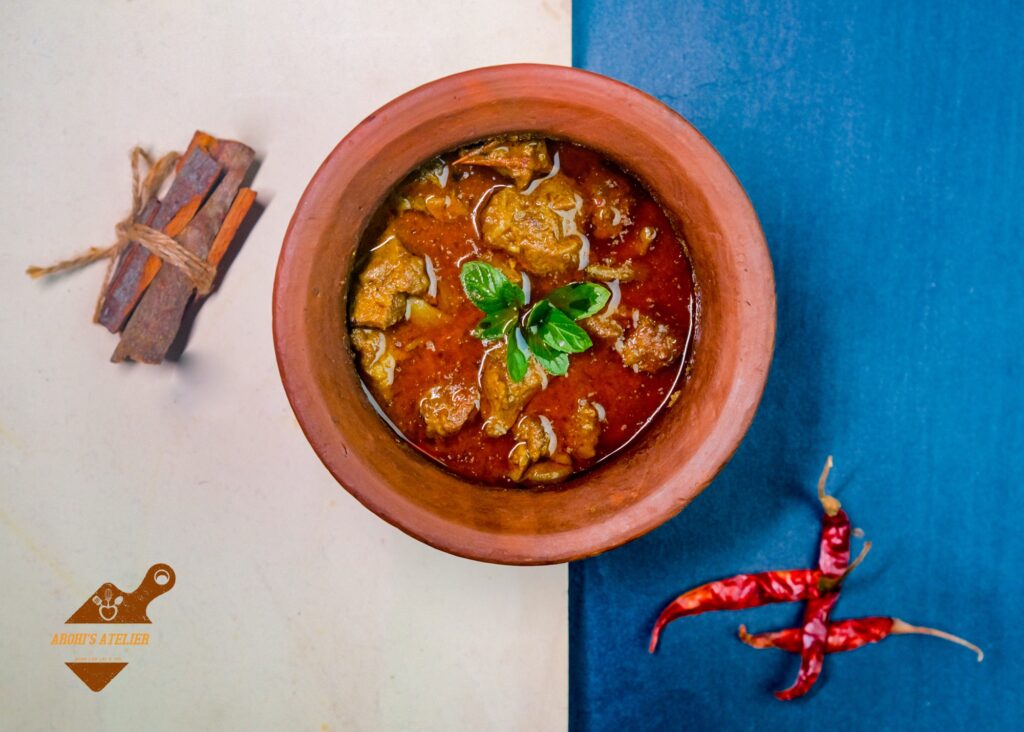
There is a shot I keep returning to: a clay bowl of curry that had been on low heat for hours, one bundle of cinnamon tied with kitchen string, two dried red chilies. That was the entire prop list, and it was enough. Clay holds heat, which is why it is still common in Bengali kitchens, and also why steam was still rising faintly from the bowl minutes after it left the stove. Every time I shoot, the instinct is to add one more thing: another napkin, a second bowl, a spoon doing nothing useful. I have learned to stop myself. The food is already doing a lot of visual work on its own, so everything around it should sit quietly.
4. Shoot From Above and Let the Table Stay Messy
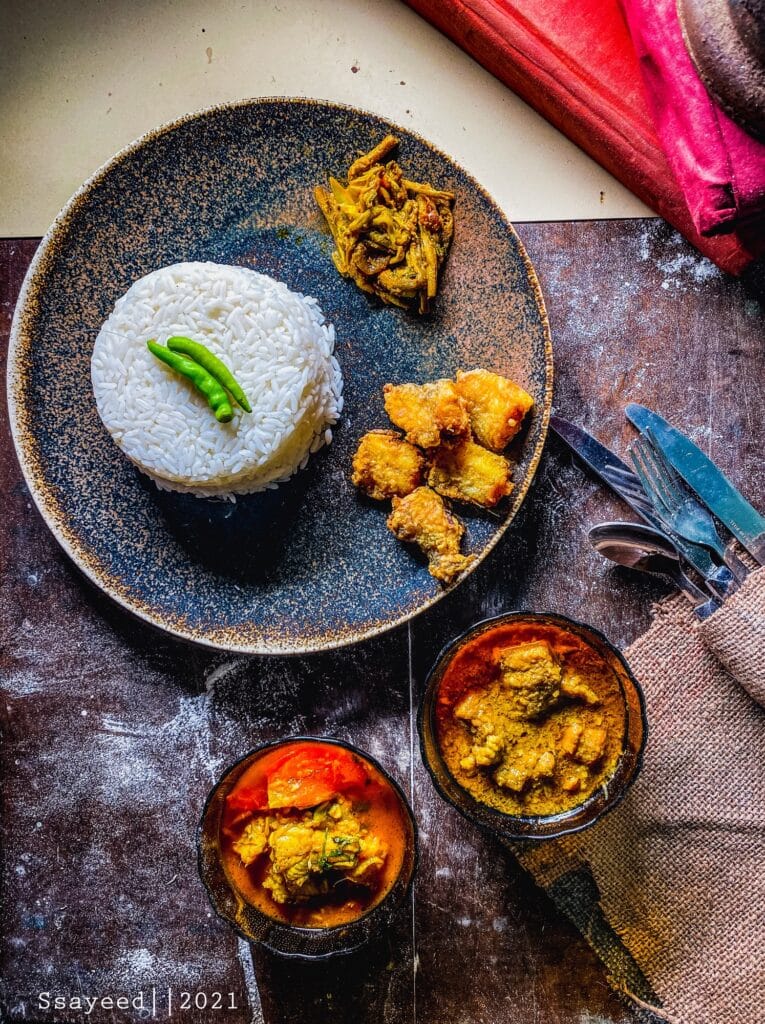
For a full spread, rice, a bhorta, a couple of curry bowls, some fried fish, I shoot straight down from directly overhead, because the whole table becomes the frame, not just one plate. I leave the cutlery wherever it actually landed and I never center anything. The food falls into the frame the way it would if people were about to sit down and eat, and that kind of imperfect arrangement reads as real in a way no amount of careful styling can fake, even at thumbnail size on someone’s scrolling phone.
5. Search Your Own House Before You Buy a Single Prop
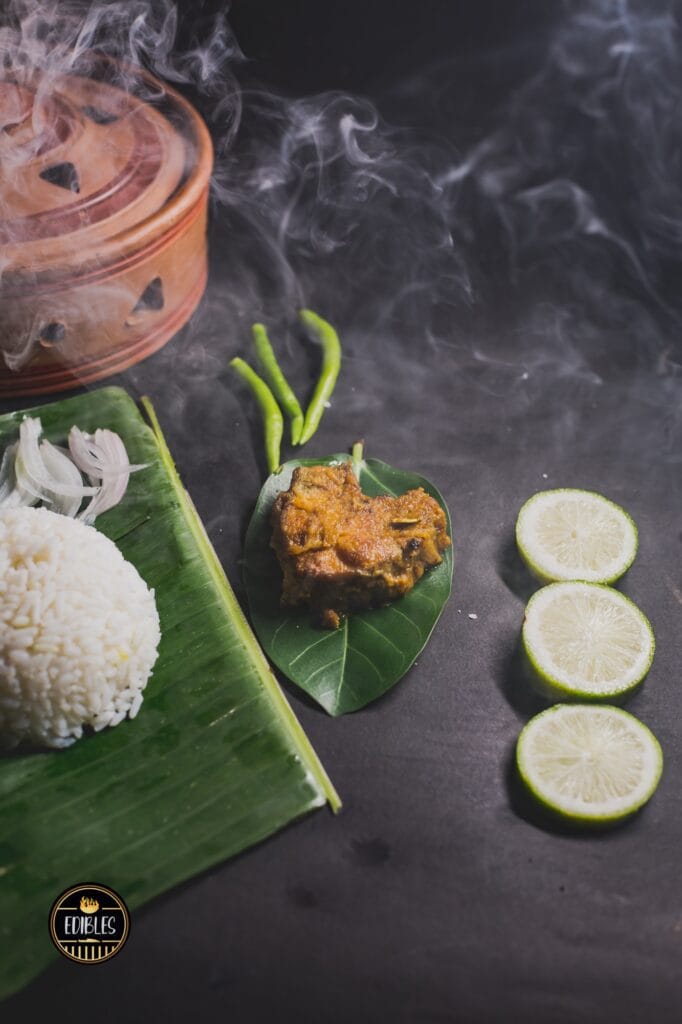
A banana leaf instead of a plate. A gamcha, the checked cotton towel found in almost every Bengali home whether anyone is using it that day or not, laid flat as a table runner. A brass thali that had not left the cupboard in years. A clay lid pulled off a pot that otherwise just sits on the stove. None of it cost anything, and all of it reads more honest than something purchased for the shoot, because these are the textures Bengali food has actually lived among for generations. I keep a running note on my phone of things I notice around the house, and it has saved more shoots than any prop shop ever could.
No lighting kit shows up anywhere in this list. No rented space either. What actually changes a photograph is a window, a surface, and paying attention to what the food is already doing before you touch it. More of these shots live on the food page.
Discover more from sayeedbm.com
Subscribe to get the latest posts sent to your email.