
There’s a particular kind of quiet that exists at Chittagong Railway Station at three in the morning. Not silence; there’s never true silence at a station, even an empty one but a stillness underneath the sound. A single fan turning somewhere overhead. A stray dog repositioning itself near the platform edge. The far-off hum of a generator that never quite switches off.
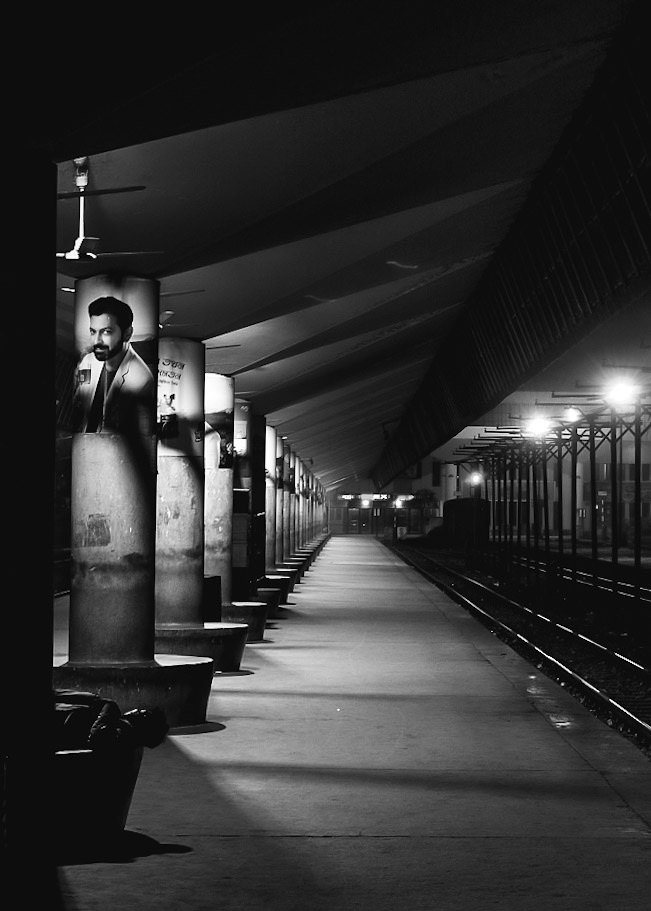
I walked the whole night to be there. No assignment sent me. No client was waiting on a delivery folder. Nobody had asked to see what Chittagong looks like at that hour, and nobody was going to check whether I’d actually gone. I went anyway, camera in hand, because something in me needed to.
That’s the question I keep returning to, years later, looking back at those frames: why does a photographer keep shooting when there’s no one to show the work to, no deadline, no metric waiting on the other end? What is the camera actually for, in those hours?
The Walks That Had No Destination
Old Chittagong taught me most of what I know about patience. Not the technical kind; exposure, focal length, timing a frame but the kind that has nothing to do with photography at all.
I’d walk for hours through its narrow lanes with no fixed plan, no shot list, sometimes without taking a single photograph for the first thirty or forty minutes. Just looking. Letting my eyes adjust to a place I already knew well, trying to see it as if I didn’t.

Most of what I saw on those walks never became a photograph. A woman folding laundry on a balcony rail. Two old men playing carrom under a single bulb, the board lit like a small stage. A cat asleep across a closed shop’s shutter, completely unbothered by the city moving around it. I didn’t always raise the camera. Sometimes I just stood there and let the moment happen without trying to keep it.
I think that’s the part most people get wrong about street photography when they’re starting out the idea that every walk needs to produce something. That if you come home without a usable frame, the walk was wasted. It took me a long time to unlearn that. The walk was never wasted. The walk was the point. The photograph, when it came, was just evidence that I’d been paying attention.
The Nights It Wasn’t About Photography At All
I won’t pretend every one of those long walks came from a healthy place. There were stretches of time when I was genuinely struggling; low, heavy, the kind of depressed that makes even small tasks feel distant. On those nights, I didn’t pick up the camera because I had a creative vision. I picked it up because it gave me a reason to put on my shoes and leave the house. Because pointing a lens at something outside myself was easier, some nights, than sitting with whatever was happening inside.
I’m careful not to overstate this. The camera didn’t fix anything. Walking for four hours through Old Chittagong with a Fujifilm Camera around my neck didn’t resolve whatever was sitting heavy in my chest that week. But it gave me somewhere to put my attention that wasn’t inward. It turned looking into a kind of task, and the task gave the night a shape it wouldn’t otherwise have had. Some of my favorite frames including a few from that railway station night, came out of exactly that kind of walk. Not because I was inspired. Because I needed somewhere to be, and the streets were always open.
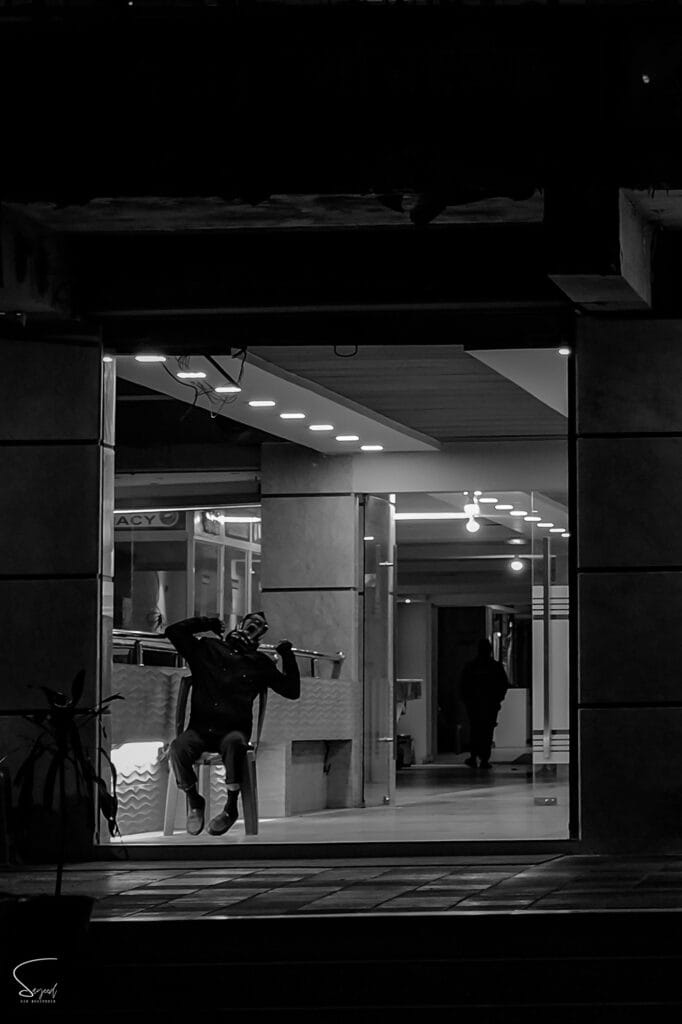
Looking back at those photographs now, I don’t see technical achievements. I see proof that I showed up to my own life on a night when showing up felt hard. That’s worth more to me than any of the shots that have actually been published.
What the Camera Is Actually For
Somewhere in the last few years, I came across other photographers writing about this same instinct. The idea that the work you make with no audience in mind is often the most honest work you’ll ever make. That a photograph taken purely because you needed to take it carries something a commissioned photograph can’t fake, no matter how well-lit or well-composed it is. I recognized the feeling immediately. I’d been living it for years on the streets of Chittagong without having language for it.
Commercial work has its own value. I don’t want to undersell it. There’s real craft in showing up for a client, understanding a brief, delivering something that does its job. But it answers a different question. It asks: can you give someone what they need? The empty-platform, three-in-the-morning kind of photography asks something else entirely: what do you actually see, when nobody’s paying for your attention?
I think every photographer needs both questions in their life. But only one of them keeps you honest.
Back at the Station
I still have the frame from that night at Chittagong Railway Station. It’s not a particularly technical photograph. The light was difficult, the platform half in shadow, a single overhead lamp doing more work than it should have had to. It’s never been licensed. It’s never been part of a client deck. For years it just sat in a folder, unseen by anyone but me.
But I know exactly what it cost to make. A whole night of walking. A version of myself that needed to leave the house and have somewhere honest to put his eyes. A platform that didn’t care whether I photographed it or not, lit by a fan turning slowly overhead, in the kind of quiet that exists underneath all the noise.

That’s why I still shoot the street even when no one’s watching. Not for the photograph. For the version of myself that shows up anyway.
Discover more from sayeedbm.com
Subscribe to get the latest posts sent to your email.