
Picture the photograph you are not supposed to be able to take. Nobody notices you. The street keeps moving as if the camera were never there. The moment survives exactly as it would have without you. Now try to make that photograph on a street in Dhaka. Or in Chittagong, where a dock worker looks up before you have even raised the camera. It never happens. Not once in eight years of trying. This is street photography Bangladesh: a practice built on being seen, not on disappearing. Every photographer here already knows it, even if the books we read never say so.

Why does classic street photography depend on being invisible?
The tradition was built on disappearing. A French photographer gave it a name decades ago: the decisive moment. It is the fraction of a second when a scene composes itself. The photographer, unseen, catches it before it changes. Garry Winogrand worked the same way on the streets of New York. He stood close enough to touch his subjects but was rarely noticed by them. The whole grammar of street photography depends on this. Candor. The unposed gesture. The sense that you are watching real life, not a performance. All of it depends on the subject not knowing you are there.
That grammar came out of cities where a stranger with a camera was ordinary. Paris in the 1930s was full of photographers and tourists. So was New York in the 1960s. Plenty of men carried camera equipment for a living. A camera raised on a sidewalk drew no more attention than an umbrella. The photographer could vanish into that ordinariness. He was not especially skilled at hiding. The city around him had simply stopped noticing cameras decades earlier.
I have spent eight years trying to vanish the same way on a street in Bangladesh. I have never managed it once. Not in the dense foot traffic of old Dhaka. A raised lens should disappear into a crowd that thick, the way it would in any packed city. It does not. Not in Chittagong either, where the streets open up around the port. There is nowhere for a photographer to hide, even when the crowd thins out enough to try.

What makes street photography Bangladesh different from the West?
A camera pointed at ordinary life is rare here, not routine, and rarity draws attention immediately. On a street in Dhaka, or along the ghat roads of Chittagong, a raised camera reads as an event. Not a tool. Someone asks what you are photographing before you have taken the shot. A shopkeeper steps into frame to greet you. A rickshaw puller slows down out of curiosity rather than habit. None of this is hostility. It is closer to hospitality, the instinct to include a stranger rather than let him work unseen. That instinct makes the Western model of the invisible observer impossible to practice honestly here.
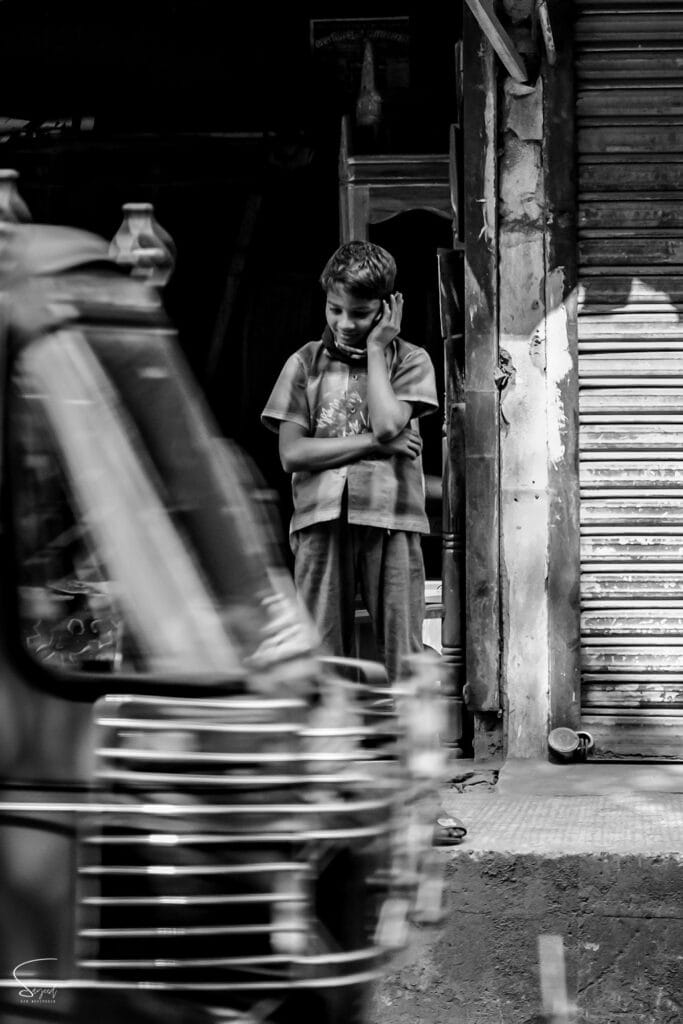
The two cities do this differently, but neither offers cover. Dhaka’s density means you are usually one of several people already looking at something. The attention arrives fast, from multiple directions at once. Chittagong is quieter on most streets away from the port. That sounds like it should help. It does not. A quieter street means fewer people to blend into. Each one has more room to notice you clearly. There is no version of Bangladesh where the crowd does the hiding for you.
A smile is the most common response, once someone notices the lens pointed their way. That is the easy version. Harder is the man who stopped me on a street in Chittagong. He would not let me leave until I deleted his photograph in front of him. Harder still is the question I get more often than I expected: which press am I publishing this for. Nobody assumes I am just looking. There has to be an outlet, an assignment, a reason bigger than curiosity. A stranger with a camera and no employer does not fit anywhere in how people here understand photography.
I no longer read that curiosity as an obstacle. I read it as the actual condition of the work.
What replaces the stolen moment when you cannot steal it?
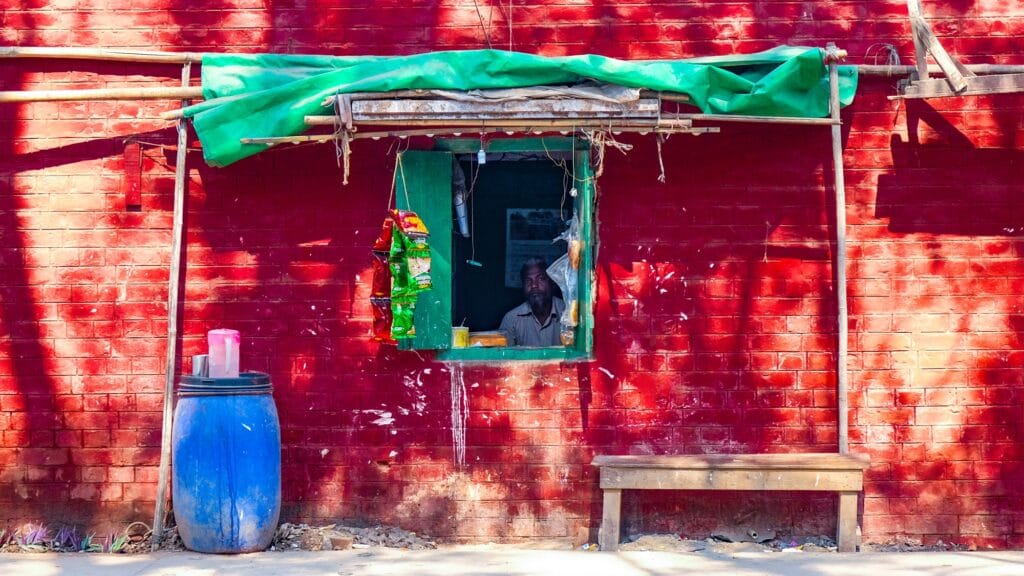
A photograph made with the subject’s awareness replaces the one made without it. If someone has already seen you, already knows you are photographing, the frame you take afterward is not a theft. It is closer to an agreement, brief and often wordless. The subject allows the moment to continue rather than pretending the camera does not exist. I have come to trust these frames more than any I managed to take unnoticed. Nothing in them depends on someone’s ignorance of what I was doing.
The idea that a street photographer must be invisible was never a universal law. It was a privilege, available to a certain kind of observer in a certain kind of city. His presence with a camera raised no questions. His body and his equipment both belonged there without explanation. Bangladesh does not extend that privilege, and I think the work is more honest for it.
Is a photograph the subject noticed still street photography?
Yes, as long as nothing in the frame was arranged. A portrait begins when the photographer gives direction, choosing a pose, an expression, or a location for the subject. None of that happens here. The rickshaw puller who glances at the lens keeps pulling. The tea seller who nods at the camera keeps pouring. The awareness changes the relationship between photographer and subject. It does not stage the scene. The street keeps behaving like a street, not a set. What changes is the fiction we tell about how the photograph was made, not the photograph itself. That is what photographing strangers in Bangladesh actually asks of you. Consent carried through a glance rather than a word. A photograph that still holds.
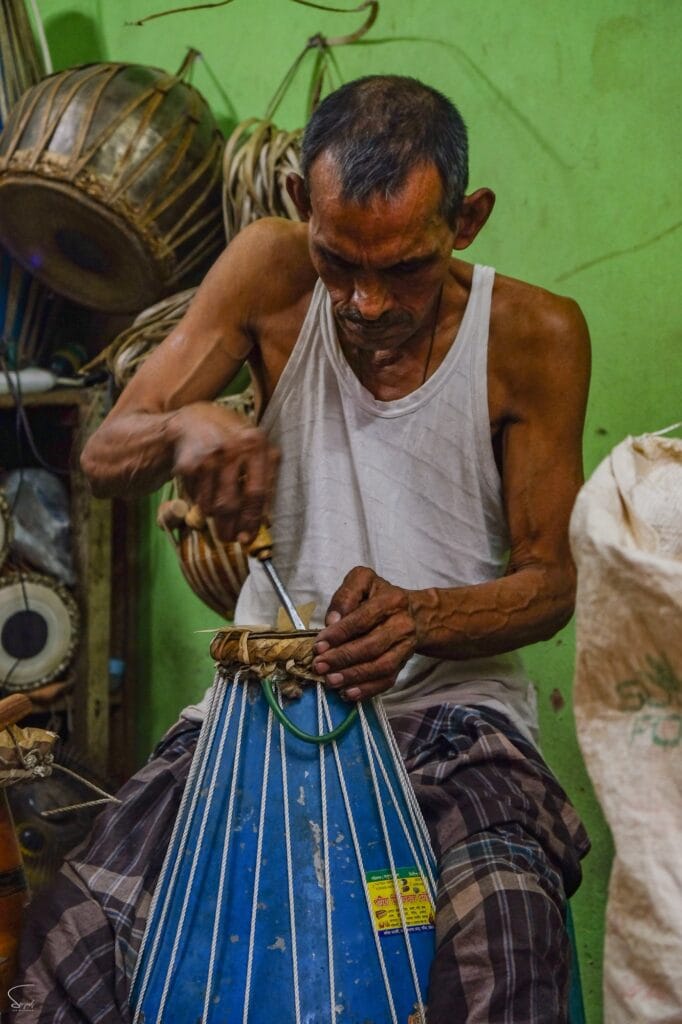
I have circled this same tension before without naming it directly. In Why I Still Shoot the Street Even When No One’s Watching, I wrote about standing at Chittagong Railway Station. I stayed with the discomfort of being watched rather than solving it. In The City I Know and the City I See, I wrote about a different gap. The ease of shooting a city you have lived in your whole life. The alertness a newer one still demands. Both pieces were circling the fact this one finally states outright. Nobody photographing a street in Bangladesh, in Dhaka or in Chittagong, works unseen. I do not have a clean resolution for what that means for the tradition I inherited. I only have eight years of frames made in full view. And a growing suspicion that they are more honest for it.
Frequently asked questions
Can you do street photography in Bangladesh without being noticed? No. A camera raised on a street in Bangladesh reads as an event, not a routine tool. Someone will notice within seconds. Street photography here works through negotiated presence rather than concealment.
What is street photography called when the subject knows they are being photographed? There is no single established term for it, though it is sometimes described as candid photography with awareness. The frame stays unposed and unstaged even though the subject has noticed the camera.
How is street photography in Bangladesh different from street photography in Paris or New York? The Western tradition assumed a photographer could disappear into crowds that were used to cameras and strangers. Bangladesh’s streets treat a camera as rare and worth noticing. That makes invisibility unworkable and shifts the practice toward visible, acknowledged presence.
Does being noticed ruin a street photograph? No. As long as the photographer does not direct or pose the subject, an acknowledged photograph still counts as street photography. The street keeps behaving naturally even when the subject is aware of the camera.
Discover more from sayeedbm.com
Subscribe to get the latest posts sent to your email.